Layton Primary School
Early Reading
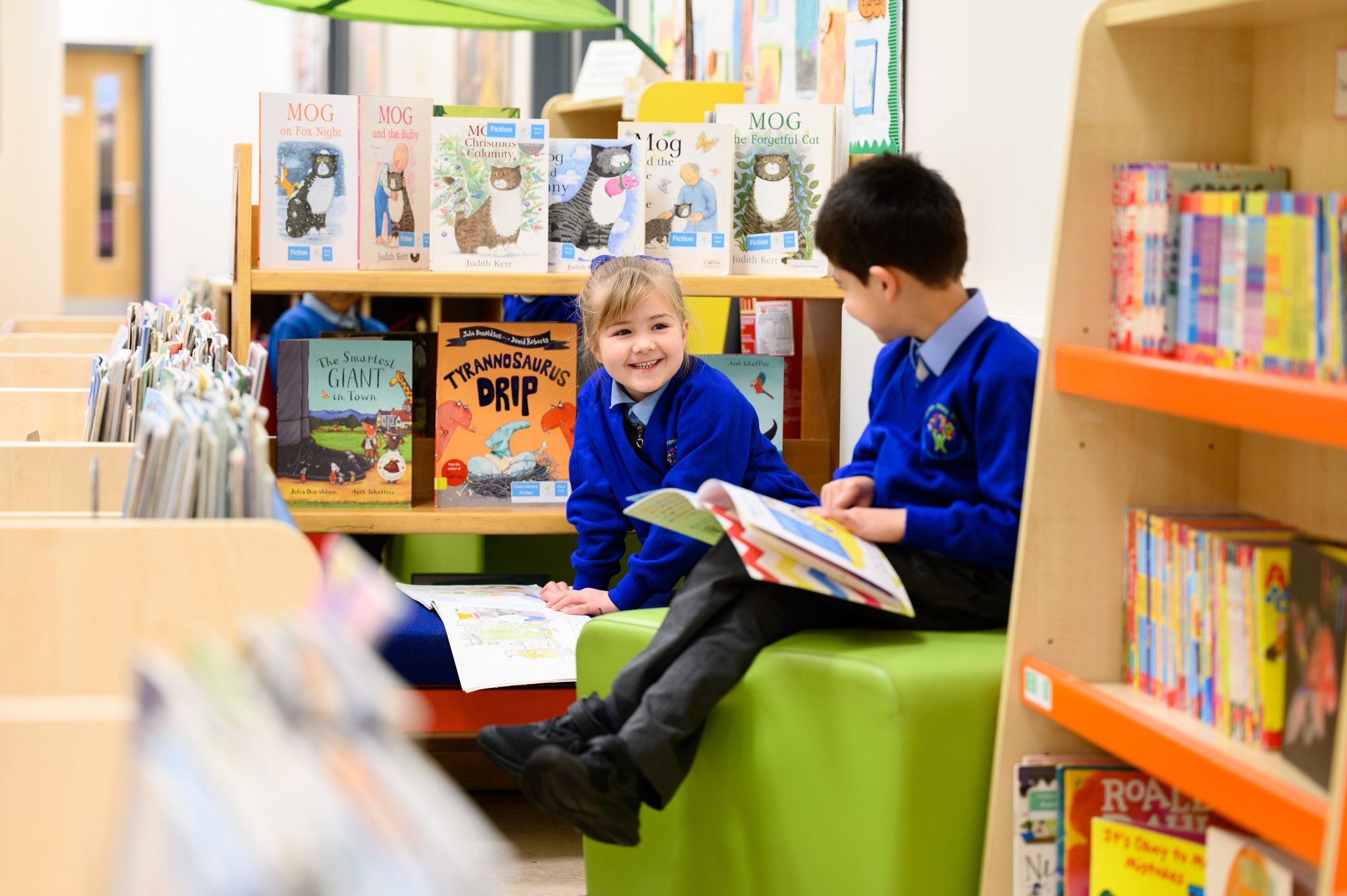
Layton School prides itself in developing a whole-school reading culture.
At Layton, reading is at the heart of every subject and defines how the school moves children from learning to read to reading to learn. If our children do not grow as readers, they will have great difficulty in growing as learners. We aim to harness a love of reading for all, and the selection of reading materials are: justified in their choice, ambitious in their content, to build a foundation for future reading, to create a living library inside the child’s mind, to open doors and opportunities to the wider world, to raise aspirations for all children, to promote independence in engaging children in reading, to embrace cultural diversity and inclusivity.
It is our belief that our pupils’ success will be defined by their ability to ‘learn to read’ fluently such that children can use and apply these skills to ‘read to learn’; thus, equipping children with the most important skill to have intrinsic motivation to read for pleasure.
“The more that you read, the more things you will know. The more that you learn, the more places you’ll go.”
Dr. Seuss
Early Reading Skills
At Layton, we value reading as an essential lifelong skill and recognise the importance of the Foundation Stage in laying the foundations for successful reading. We are committed to developing both word reading (learning to read) and language comprehension (reading to learn) within a language-rich environment.
From the moment children begin in Foundation Stage, the development of early reading is a priority. We believe that strong foundations in reading, writing and spoken language are essential for children's future success and prepare them well for the National Curriculum from Year 1 onwards.
Reception children develop early reading skills using a variety of literary techniques including storytelling, role-play, singing and rhyming activities and discrete daily phonics sessions, which start as soon as children start in Foundation Stage.
Storytelling and shared reading are central to daily practice. Children engage in discussions about books and illustrations, make predictions and develop their understanding of characters, settings and events. They also learn a wide range of poems, rhymes and repeated refrains, enabling them to join in confidently and apply this language during role play and independent learning.
Phonics sessions are delivered through the Layton’s Letters and Sounds Synthetic Systematic Phonics (SSP) programme whereby the children learn phonemes in a systematic order. Children learn to blend and segment sounds at their own rate with explicit teaching to support using and applying phonics in their writing. Discrete daily phonics sessions continue to be taught throughout years 1 and 2, and beyond if required, in accordance with their phonic ability.
As children learn individual sounds, they also learn an associated action using ‘Cued Articulation’. These visual and physical cues support children in understanding how sounds are produced, strengthening their articulation and phonological awareness.
Children develop an understanding of rhyme and alliteration and learn to recognise, identify and manipulate the individual sounds within words. For example, they learn to identify the initial sound in words such as cat and begin blending and segmenting sounds orally before applying these skills to reading and writing.
Children hear adults model fluent reading every day. Through regular exposure to expressive and accurate reading, children develop an understanding of pace, intonation and expression. Beginner readers, regardless of age, focus primarily on accurate decoding before reading fluently develops over time.
Non-verbal Communication
From the moment children join Layton Primary School, they are immersed in the use of Makaton. This creates an inclusive learning environment where all forms of communication are valued and celebrated, enabling every child to communicate confidently.
Developing Dialogue
At Layton, we believe that high-quality talk is fundamental to the development of early reading, writing and thinking. We prioritise a language-rich environment in which adults engage children in meaningful conversations throughout the day.
As a dialogic teaching school, we recognise that the more children participate in purposeful discussion, the greater their understanding becomes. Rich classroom dialogue enables children to acquire new vocabulary, deepen their knowledge, organise their thinking and develop the language they need for reading, writing and learning across the curriculum.
From the beginning of Foundation Stage, children are taught how to work effectively with a talk partner. They learn to listen attentively, discuss questions and ideas, explain their thinking and agree on shared responses. Children are also encouraged to reflect on and respond to their partner's ideas, helping to create a classroom culture built on respect, collaboration and confidence.
Alongside this, children develop the skills of Agree, Build, Challenge (ABC). They learn to explain why they agree with a peer, build upon another person's ideas or respectfully challenge a viewpoint using evidence and reasoning. These approaches ensure every child is expected to contribute and develop the confidence to articulate their thinking clearly.
Speech, Language and Communication Needs
Early identification and intervention are central to our inclusive approach.
Speech and language therapists are based in school for three and a half days each week, alongside a full-time Speech and Language Learning Support Assistant (LSA). This specialist provision enables children to receive timely support, including those who require assistance with speech sound production in order to access phonics successfully.
Every child in Foundation Stage is assessed using the WellComm Speech and Language Toolkit. Where additional needs are identified, targeted interventions are planned and delivered to ensure children make strong progress in their communication and language development.
High-quality Adult–Child Interactions
Developing early reading relies upon high-quality back-and-forth interactions between adults and children throughout the day. These purposeful interactions provide rich opportunities to extend children's language, thinking and understanding.
Continuous Provision
Children have regular opportunities to apply their developing language through carefully planned role-play experiences within the continuous provision. Adults support children in using newly acquired vocabulary through purposeful interactions and meaningful play.
Extra-curricular Opportunities
Children are invited to attend our weekly Breakfast Book Club, where they enjoy sharing books alongside friends, parents and carers, helping to foster positive reading habits beyond the classroom.
Home-School Partnership
We recognise that parents and carers play a vital role in developing early reading. Regular reading at home, shared storytelling, conversations and language-rich activities all contribute significantly to children's progress.
Parents and carers record reading through the Boom Reader app. Each week, a QR code provides access to the class's core text alongside suggested questions that support discussion and help develop children's understanding at home.
Where children are at risk of falling behind, additional support is provided promptly. Every child reads with their class teacher at least once each week, while children requiring further support are heard read daily by an adult. Precision Teaching is used where appropriate to reinforce the learning of individual sounds, blending and decoding skills.
Throughout Reception and Key Stage 1, children take a reading book home that is linked to their phonetic blending ability, as well as a library book which they can share or listen to with their parent. These books reflect a wide range of interests and genres at the appropriate level and are a combination of staff and children’s choices.